Can You Grow Cannabis at Home in Missouri? Amendment 3's Home-Grow Rule, Explained
Unlike many state adult-use laws, Missouri's Amendment 3 explicitly authorized home cannabis cultivation for adults 21 and older — subject to a registration requirement. That makes Missouri one of the more permissive states in the Midwest on home-grow — but the rules are specific, and they interact in non-obvious ways with rental contracts, municipal restrictions, and federal law. Here's a 2026 guide.
The Core Rule and the Registration
Missouri law allows adults 21 and older who hold a valid home cultivation registration card to grow cannabis at home. The registration requires payment of a registration fee (recently $100 per year) and registers the cultivator's residential address with the state. Registered cultivators may grow up to six flowering plants, six non-flowering plants, and six clones (plants under 14 inches tall) — a total of up to 18 plants at various growth stages — in a single registered household.
Where and How
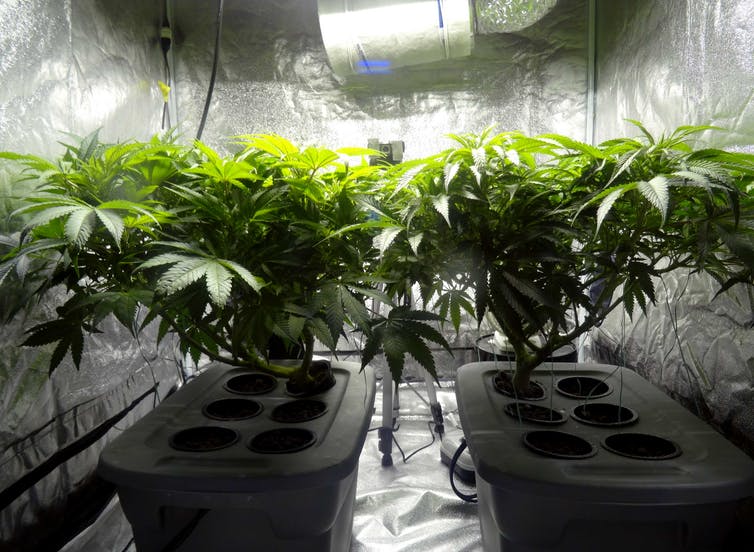
Plants must be grown in a secured, enclosed, and locked space that is not visible from public view without the use of binoculars, aircraft, or other optical aids. This language is deliberate: the state is trying to distinguish home cultivation from commercial growing and to prevent exposure to minors, passersby, or unauthorized visitors. Practical compliance means indoor grows (closet, basement, grow tent, spare room) or fully enclosed outdoor structures (privacy-fenced backyard with lockable access, locked greenhouse). Plants visible over a standard backyard fence do not meet the rule.
What You Can Do With the Harvest
Home-grown cannabis is for personal use. It cannot be sold, traded for other goods, or gifted above certain minor amounts. Home-grown cannabis can be consumed on private property by adults 21 and older, the same as store-bought cannabis. Home-grown cannabis cannot be transported across state lines — federal law applies at state borders regardless of destination state cannabis laws.
Rental Properties
Missouri law allows landlords to prohibit home cannabis cultivation in residential leases. If you rent in Columbia, read your lease carefully: many residential leases specifically prohibit cannabis cultivation, cannabis consumption, or both. Violation of a lease prohibition can trigger lease termination. If cultivation matters to you, look for landlords who do not prohibit it, or negotiate lease terms before signing.
Municipal and HOA Rules
Missouri municipalities and homeowners' associations may impose additional restrictions on home cultivation beyond state law. Columbia's current rules generally align with state law, but consumers should check their municipal code and any HOA covenants before starting a grow. Some Missouri cities and counties have enacted additional restrictions or have opted out of elements of the adult-use cannabis framework.
Federal Law Still Matters
Cannabis remains federally illegal regardless of Missouri home-grow legality. The practical federal implications for home growers are mostly indirect: federal housing programs (public housing, Section 8, etc.) can treat cannabis cultivation as grounds for termination of benefits. Federal employees and contractors remain subject to federal rules. Firearms purchases are federally restricted for users of federally-illegal substances, and cannabis is one of them.
Security and Safety
The "secure and enclosed" requirement is partly a safety provision. Home cultivation creates specific risks: theft (cannabis plants have meaningful black-market value), fire (grow lights and ventilation systems draw significant power), and mold (indoor grows have high humidity and need controlled ventilation). Compliant home grows invest in proper electrical setup, ventilation, and security — and those investments are worthwhile for reasons beyond legal compliance.
Seeds, Clones, and Starting Materials
Missouri dispensaries can sell cannabis seeds and clones to consumers — the starting materials for home cultivation. Patients in the medical program have additional access paths. Out-of-state seed-sourcing remains legally complicated because of federal law at state borders; Missouri-sourced seeds and clones are the cleanest path for compliant home growers.
Cost and Economics
Home cultivation has meaningful economics for serious consumers. A well-run indoor grow under Missouri's plant cap can produce, over a growing cycle, flower quantities that would cost hundreds or low thousands of dollars at retail. But the up-front setup cost — lights, ventilation, tent, growing medium, nutrients — is real, and the learning curve is meaningful. Factor in the annual $100 registration fee and the decision is still favorable for serious home growers but less so for casual consumers. For most Missouri cannabis consumers, dispensary purchases are cheaper and easier than home cultivation until they're grow-experienced enough to produce quality results consistently.
Quality Control
Dispensary cannabis carries mandatory batch-level lab testing for cannabinoids, heavy metals, residual pesticides, mold, and microbial contamination. Home-grown cannabis carries no such testing. Experienced home growers manage their growing environment carefully to avoid these issues; new home growers should plan for a learning period before relying on home-grown product as their primary source.
Why This Matters in Columbia
For Columbia adults — including residents across the Boone County footprint — Missouri's home cultivation rule is a meaningful legalization feature. It treats cannabis more like home-brewing beer (legal within limits, regulated, personal-use only) than like a purely commercial consumer category. That's a specific policy choice, and it distinguishes Missouri from several neighboring states that have no home-grow allowance or more restrictive rules.
But for many Columbia consumers, the right 2026 answer is still dispensary purchases: licensed, tested, in child-resistant packaging, with receipt-ready legal provenance. Home cultivation sits alongside that dispensary market as a personal-use option for registered adults who want to grow their own — a meaningful part of the broader legal cannabis culture that Amendment 3 created.